Options
Determination of As3+, Sb3+ AND Se4+ metal ions in drinking water using HG-ICP-EOS technique
Date issued
2020-10
Author(s)
DOI
10.21698/simi.2020.ab34
Abstract
The abundance of metals in drinking water can have adverse effects on human health. Supply safe drinking water is an important factor in preventing the transmission of diseases through water. Therefore continuous monitoring of drinking water quality is essential. Metals that have been detected in potentially harmful concentrations in drinking water systems are caused by industrial pollution, anthropogenic pollution or
as a result of corrosion processes of the component materials of drinking water supply networks.
European Directive on drinking water 98/83/EC, transposed into Romanian Legislation in the form of Law No. 458/2002 updated by Law No. 311 of 2004, imposes 10 µg/L as concentration limit for arsenic in water intended for human consumption, 5 µg/L for antimony and 10 µg/L for selenium. Drinking water and mineral water can be contaminated with toxic metals, such as: antimony, by degradation of polyethylene terephthalate (PET) used in the composition of plastic bottles, due to damage processes and due to improper storage. Antimony
possesses a risk to human health, affecting the respiratory, cardiovascular, gastrointestinal, dermal and reproductive systems. The presence of arsenic in drinking water is due to both groundwater and surface water
contamination through discharges of industrial effluents containing arsenic. Arsenic (As3+, As5+) causes skin damage, circulatory and peripheral nerve disorders. Selenium is toxic only in large quantities, its presence in drinking water is mainly related to mining activities and industrial emissions. Usually, these volatile metallic elements are found in low concentrations, and their determinations require the use of sensitive analytical techniques. Their detection can be done using spectrometry UV-VIS, AAS, HG-AAS, ICP-EOS, HG-ICP-EOS, ICPMS and HG-ICP-MS.
as a result of corrosion processes of the component materials of drinking water supply networks.
European Directive on drinking water 98/83/EC, transposed into Romanian Legislation in the form of Law No. 458/2002 updated by Law No. 311 of 2004, imposes 10 µg/L as concentration limit for arsenic in water intended for human consumption, 5 µg/L for antimony and 10 µg/L for selenium. Drinking water and mineral water can be contaminated with toxic metals, such as: antimony, by degradation of polyethylene terephthalate (PET) used in the composition of plastic bottles, due to damage processes and due to improper storage. Antimony
possesses a risk to human health, affecting the respiratory, cardiovascular, gastrointestinal, dermal and reproductive systems. The presence of arsenic in drinking water is due to both groundwater and surface water
contamination through discharges of industrial effluents containing arsenic. Arsenic (As3+, As5+) causes skin damage, circulatory and peripheral nerve disorders. Selenium is toxic only in large quantities, its presence in drinking water is mainly related to mining activities and industrial emissions. Usually, these volatile metallic elements are found in low concentrations, and their determinations require the use of sensitive analytical techniques. Their detection can be done using spectrometry UV-VIS, AAS, HG-AAS, ICP-EOS, HG-ICP-EOS, ICPMS and HG-ICP-MS.
Files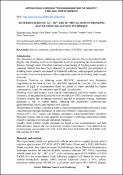
Loading...
Name
34.pdf
Description
Abstract
Size
460.8 KB
Format
Adobe PDF
Checksum
(MD5):b6624b855ef5b19dc8ac8b50602f61ac
Loading...
Name
PCM.4-Determination As.pdf
Description
Poster
Size
714.07 KB
Format
Adobe PDF
Checksum
(MD5):5c3dfc75e3ee6f238599a07aac51e280