Options
Biodegradation of BP-3 using gram-negative bacterial strains
Date issued
2020-10
Author(s)
DOI
10.21698/simi.2020.ab20
Abstract
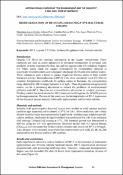
Organic UV filters are common compounds in the aquatic environment. These chemicals are used as active substances in chemical formulations of personal care products, in order to protect the skin, lips and hair against solar UV radiation. Organic UV filters easily reach the aquatic environment by incompletely removal in
wastewater treatment plants and subsequent discharge of effluents into surface waters. These substances pose a threat to aquatic organisms because many of them exhibit hormonal activity. Benzophenone-3 (BP-3) is the most commonly used UV filter in cosmetic formulations worldwide. In surface waters in Romania, the concentration range detected for BP-3 ranged between 3-52 ng/L. Thus, degradation using bacterial strains can be a promising alternative to reduce the problems of environmental pollution with BP-3. Bacteria are a cost-effective alternative to catalytic processes. Finding suitable bacterial strains for BP-3 removal could improve the WWTP process by bioaugmentation. The aim of this study was the biodegradation of BP-3 in presence
of two bacterial strains, namely Salmonella typhymurium and Serratia rubidae.
wastewater treatment plants and subsequent discharge of effluents into surface waters. These substances pose a threat to aquatic organisms because many of them exhibit hormonal activity. Benzophenone-3 (BP-3) is the most commonly used UV filter in cosmetic formulations worldwide. In surface waters in Romania, the concentration range detected for BP-3 ranged between 3-52 ng/L. Thus, degradation using bacterial strains can be a promising alternative to reduce the problems of environmental pollution with BP-3. Bacteria are a cost-effective alternative to catalytic processes. Finding suitable bacterial strains for BP-3 removal could improve the WWTP process by bioaugmentation. The aim of this study was the biodegradation of BP-3 in presence
of two bacterial strains, namely Salmonella typhymurium and Serratia rubidae.
Files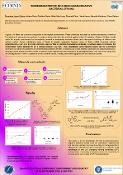
Loading...
Name
PAMS.3-Biodegradation BP3.pdf
Description
Poster
Size
2.05 MB
Format
Adobe PDF
Checksum
(MD5):8973f9f28629db0051cb3d3b27dc076f
Loading...
Name
20.pdf
Description
Abstract
Size
511.32 KB
Format
Adobe PDF
Checksum
(MD5):4d82fe4ef1f675236a6aa7450f51a8c6