Options
Waste electrical and electronic equipment – processing as thermoplastic composites
Date issued
2020-10
Author(s)
DOI
10.21698/simi.2020.ab31
Abstract
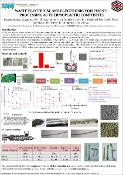
In the last decades, the waste electric and electronic equipment (WEEE) has increased substantially due to an accelerated development of the economy, the life time of the electronics, or the diversified supply of these products. Proper initiatives regarding the energy consumption, the reduction of disposed solid and wastewater by e-waste recycling, etc. can reduce the environmental impact. Taking into account the aspects regarding the waste separation into individual polymers, the majority polystyrene fraction of WEEE can be recycled by melt
compounding as elastomer modified compounds. The method can bring significant economic and technical advantages with obtaining performance composites. The 10% share of waste printed circuit boards (WPCB) from WEEE can be also recycled, but the high content of epoxy or phenolic thermosetting resins makes it
difficult to be used in a conventional melt processing method. Presently, the profitability is due to the metals and glass fiber recovery. Hence, several proposed applications of non-metallic WPCB have been comprehensively examined. One method includes its use as filler in thermoplastic composites. The research was focused on processing by extrusion and injection molding some compositions containing WEEE. The amount of waste was selected based on the processability and mechanical properties of WEEE based compounds with different percent of the polystyrene fraction and WPCB, respectively, obtained by melt
compounding. The characteristics were tested after modifying the polystyrene fraction of WEEE with styrene-butadiene block-copolymer. For waste printed circuit boards, recycled polypropylene was used as continuous phase.
compounding as elastomer modified compounds. The method can bring significant economic and technical advantages with obtaining performance composites. The 10% share of waste printed circuit boards (WPCB) from WEEE can be also recycled, but the high content of epoxy or phenolic thermosetting resins makes it
difficult to be used in a conventional melt processing method. Presently, the profitability is due to the metals and glass fiber recovery. Hence, several proposed applications of non-metallic WPCB have been comprehensively examined. One method includes its use as filler in thermoplastic composites. The research was focused on processing by extrusion and injection molding some compositions containing WEEE. The amount of waste was selected based on the processability and mechanical properties of WEEE based compounds with different percent of the polystyrene fraction and WPCB, respectively, obtained by melt
compounding. The characteristics were tested after modifying the polystyrene fraction of WEEE with styrene-butadiene block-copolymer. For waste printed circuit boards, recycled polypropylene was used as continuous phase.
Files
Loading...
Name
31.pdf
Description
Abstract
Size
527.63 KB
Format
Adobe PDF
Checksum
(MD5):912f5799d1873a49dff4ae60879585aa
Loading...
Name
PAMS.14-Waste electrical.pdf
Description
Poster
Size
1.18 MB
Format
Adobe PDF
Checksum
(MD5):ed32b1001b6747d110896553cddb981d