Options
AOX and TOC occurrence levels in surface water and sediments of Danube River
Date issued
2020-10
Author(s)
DOI
10.21698/simi.2020.ab33
Abstract
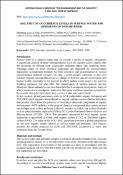
Surface water is a complex matrix that can contain a variety of organic compounds. A significant amount of these micropollutants reach the surface waters mainly after the discharge of effluent from wastewater treatment plants into receiving rivers. Although many of these chemical pollutants are regulated by environmental
legislation, standardized methods for their detection and quantification in various environmental matrices accounts for only a small amount compared to their real number. Organic micropollutants pose a danger to both the aquatic environment and human health, especially in the context in which surface water sources are used for drinking purposes, but also after the consumption of various aquatic species. Moreover, these substances can have harmful effects on aquatic ecosystems, many of which possess toxic, mutagenic, endocrine disruptive and bioaccumulative properties. By transfer along the food chain, they can reach also into human food.
In this context, global parameters such as AOX (adsorbable organic halogens) and TOC/DOC (total organic carbon/dissolved organic carbon) can be effective indicators that provide clues about the presence of hazardous chemical components in aquatic environment. AOX include a wide range of chemical compounds that contain at least one halogen atom in their molecule (chloride, bromide or iodide, but without fluoride)
such as polychlorinated biphenyls (PCBs), DDT, polychlorinated dibenzo-dioxins and dibenzo-furans (PCDDs / DFs). The parameter measured for total organic matter evaluation is quantified as either total organic carbon (TOC) or dissolved organic carbon (DOC). The value of the TOC / DOC parameter provides a global information
on the total organic matter content in surface water and sediment. This abstract presents the results obtained for AOX and TOC/DOC parameters in water and sediments from the Danube River.
legislation, standardized methods for their detection and quantification in various environmental matrices accounts for only a small amount compared to their real number. Organic micropollutants pose a danger to both the aquatic environment and human health, especially in the context in which surface water sources are used for drinking purposes, but also after the consumption of various aquatic species. Moreover, these substances can have harmful effects on aquatic ecosystems, many of which possess toxic, mutagenic, endocrine disruptive and bioaccumulative properties. By transfer along the food chain, they can reach also into human food.
In this context, global parameters such as AOX (adsorbable organic halogens) and TOC/DOC (total organic carbon/dissolved organic carbon) can be effective indicators that provide clues about the presence of hazardous chemical components in aquatic environment. AOX include a wide range of chemical compounds that contain at least one halogen atom in their molecule (chloride, bromide or iodide, but without fluoride)
such as polychlorinated biphenyls (PCBs), DDT, polychlorinated dibenzo-dioxins and dibenzo-furans (PCDDs / DFs). The parameter measured for total organic matter evaluation is quantified as either total organic carbon (TOC) or dissolved organic carbon (DOC). The value of the TOC / DOC parameter provides a global information
on the total organic matter content in surface water and sediment. This abstract presents the results obtained for AOX and TOC/DOC parameters in water and sediments from the Danube River.
Files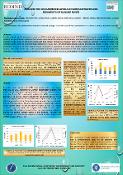
Loading...
Name
PCM.3-AOX.pdf
Description
Poster
Size
1.32 MB
Format
Adobe PDF
Checksum
(MD5):4f253139f8703a6c9e6d8a0352f70226
Loading...
Name
33.pdf
Description
Abstract
Size
315.45 KB
Format
Adobe PDF
Checksum
(MD5):df2c881368e70c0a59c8db30167466be